Nuisance animal intrusions in Greenville County demand scientific mechanical exclusion rather than indiscriminate chemical deterrents or toxic baits. In historic neighborhoods like North Main, Overbrook, and Augusta…
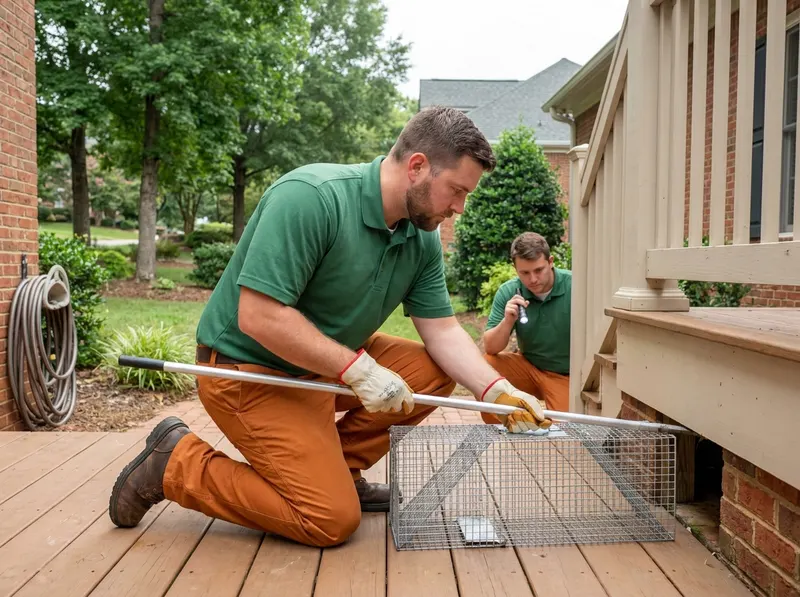
Nuisance animal intrusions in Greenville County demand scientific mechanical exclusion rather than indiscriminate chemical deterrents or toxic baits. In historic neighborhoods like North Main, Overbrook, and Augusta Road, mature oak canopies allow eastern gray squirrels and raccoons to access soffits, louvered gable vents, and fascia lines. When animals breach these exterior barriers, they crush fiberglass insulation, sever electrical wiring, and introduce zoonotic risks such as roundworm eggs or histoplasmosis spores. GoldenMeadow Pest Defense inspects structures from the foundation vents along crawlspaces up to the ridge caps of slate, tile, or asphalt roofs to identify physical breach points. Ground-level invaders such as Virginia opossums and striped skunks exploit crawlspace doors and unsealed lattice skirting in older homes near Cleveland Park and Nicholtown, seeking dry nesting chambers during wet Upstate springs.
Effective management relies on species-specific biology and non-lethal eviction mechanics. In properties across Parkins Mill, Alta Vista, and Botany Woods, squirrel activity concentrates in morning hours, whereas raccoons and bats emerge after dusk. Technicians deploy one-way exclusion doors, heavy-gauge steel wire mesh, and species-rated live traps aligned with guidelines from the South Carolina Department of Natural Resources. Trapping alone does not solve an infestation; unsealed construction gaps along roof flashing or frieze boards will simply invite neighboring populations. Physical exclusion requires installing galvanized steel hardware cloth across gable vents, securing metal drip edges along rooflines, and applying structural sealants. For bat colonies inhabiting attics near the Reedy River and Falls Park on the Reedy, operations comply with federal maternity season restrictions recognized by the U.S. Fish and Wildlife Service, preventing exclusions between May and August to safeguard flightless pups.
Property owners choosing between temporary DIY trapping and complete architectural exclusion face structural trade-offs. Setting single retail cage traps on lawns catches non-target outdoor animals while leaving nesting females inside attics, increasing interior architectural damage as trapped young attempt to chew through drywall. Complete architectural mitigation involves three structural phases executed in exact sequence. Step 1 establishes acoustic and thermal perimeter mapping to count target animals and pinpoint primary entry gaps. Step 2 installs positive-exit funnels or humane live-capture systems to clear the building envelope without separating nursing mothers from kits. Step 3 seals all secondary breach points with minimum 19-gauge galvanized hardware cloth, followed by Step 4, which sanitizes droppings using antimicrobial compounds compliant with standard Centers for Disease Control and Prevention remediation guidance. In foothill elevations like The Cliffs Valley or around Paris Mountain State Park, heavy forest borders increase wildlife pressure, making non-corrosive chimney caps and foundation crawlspace metal barriers essential long-term investments against repeated winter breaches.
Every job gets a firm, written price after an on-site visit.
Tell us about your wildlife control and removal in greenville, sc job in Greenville and we'll send a clear, written quote, usually the same day.
 GoldenMeadow Pest Defense