Residential pest defense in the Upstate targets pests driven indoors by regional climate patterns. Heavy precipitation washing through the red clay soils of Greenville County frequently pushes wood roaches, centipedes,…
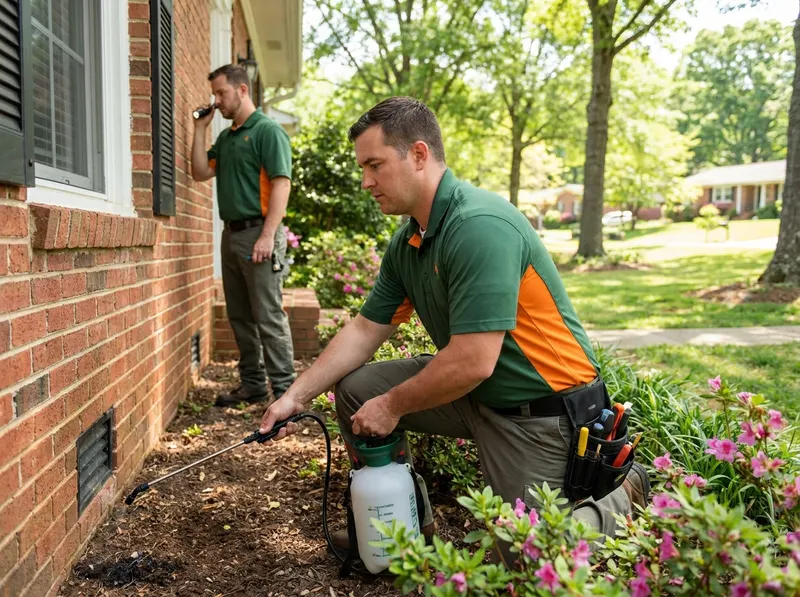
Residential pest defense in the Upstate targets pests driven indoors by regional climate patterns. Heavy precipitation washing through the red clay soils of Greenville County frequently pushes wood roaches, centipedes, and Argentine ants out of natural turf zones toward residential slabs. In mature neighborhoods like Augusta Road, Alta Vista, and North Main, historic home architecture often features vented fieldstone foundations or stacked crawlspaces with relative humidity levels exceeding 70 percent. These sub-floor spaces become active breeding harborage zones. Standard residential service establishes non-repellent perimeter defenses using guidelines set by the Clemson University Department of Pesticide Regulation, applying structural controls that stop structural infiltration without indoor broadcast spraying.
In newer developments across Verdae and master-planned communities near The Cliffs Valley, settling foundations create narrow expansion joints and service penetrations that admit rodents and subterranean termites. Our protocol avoids the widespread interior chemical broad-sprays of older pest control eras, substituting physical crack-and-crevice treatments and micro-encapsulated liquid barriers guided by the EPA Integrated Pest Management Standards. Technicians focus on mechanical sealing around sill plates, electrical conduit feeds, and HVAC refrigerant lines. Properties near heavily wooded areas, such as homes bordering Paris Mountain State Park or the Reedy River corridor near Cleveland Park, experience elevated pressure from perimeter rodents; these sites require secure external monitoring stations complying with CDC Rodent Control Directives.
For suburban properties in Gower Estates, Overbrook, Nicholtown, and Botany Woods, moisture regulation beneath subfloors directly governs pest pressure. High ambient humidity documented by the National Weather Service Greenville-Spartanburg causes wood moisture equivalents in unencapsulated crawlspaces to cross 18 percent, attracting powderpost beetles, mold, and subterranean colonies described by the United States Department of Agriculture. Technicians inspect foundational moisture levels, apply targeted borate barrier products directly to sill plates, and install tamper-resistant monitoring terminals around the exterior dripping line. Rather than locking homeowners into forced multi-year agreements, service is deployed on scheduled maintenance intervals or targeted single visits, backed by verified structural assessments before any equipment is unloaded.
Every job gets a firm, written price after an on-site visit.
Tell us about your residential pest control in greenville, sc job in Greenville and we'll send a clear, written quote, usually the same day.
 GoldenMeadow Pest Defense