Red imported fire ants present aggressive territorial behaviors across Greenville County, thriving along the moisture-rich banks of the Reedy River corridor near Cleveland Park and expanding throughout compacted…
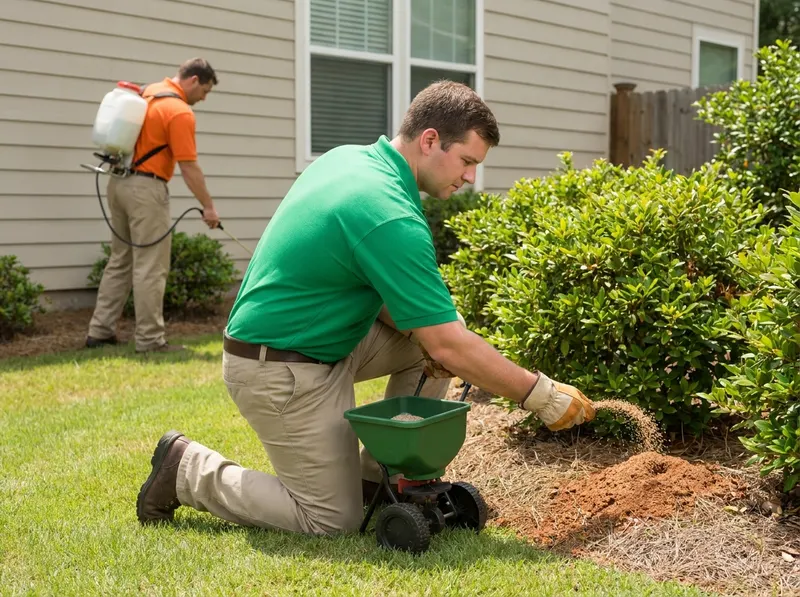
Red imported fire ants present aggressive territorial behaviors across Greenville County, thriving along the moisture-rich banks of the Reedy River corridor near Cleveland Park and expanding throughout compacted residential plots in Parkins Mill and Gower Estates. Traditional surface-only dusting frequently induces colony budding, which causes a single queen colony to fracture into multiple defensive satellites along foundation footings. A scientific exclusion protocol utilizes insect growth regulators (EPA-registered compounds) mapped specifically to subterranean foraging habits, arresting reproductive cycles rather than saturating outdoor living spaces with volatile synthetic chemicals. This boundary strategy forms an invisible defensive shield between landscaped turf and interior thresholds, safeguarding crawlspaces and concrete expansion joints from colony migration.
Property structures located along heavily vegetated zones such as Botany Woods, Overbrook, and The Cliffs Valley face recurring pressure from shifting soil temperatures and seasonal moisture shifts common to Upstate South Carolina. Soil types dense in Piedmont red clay hold thermal mass, driving workers to construct deep subterranean galleries along sidewalk edges and structural footings before visible mounds appear in open grass. In accordance with integrated pest management principles outlined by the Clemson Cooperative Extension, treatments integrate targeted metabolic baits with discrete perimeter drench applications, avoiding arbitrary baseboard spraying inside living areas. This targeted approach preserves beneficial predatory ground beetles and native pollinators while systematically dismantling the social hierarchy of invasive mounds.
Effective colony eradication follows a sequential field procedure. In Step 1, technicians conduct a visual perimeter inspection around foundation slabs, stone retaining walls, and utility conduits to map subsurface tunnel networks. In Step 2, granular insect growth regulators evaluated under USDA APHIS regional quarantine programs are broadcast evenly across turf sectors at calibrated distribution rates. In Step 3, precision hydraulic applications seal foundation weep screeds and structural entry pathways to neutralize foraging columns attempting interior movement. In Step 4, active nesting centers are treated via controlled localized drenching, preventing emergency brood evacuation into undisturbed lawn areas. In Step 5, post-treatment assessments quantify foraging suppression within 14 to 21 days as workers transfer systemic actives directly to primary queens.
Every job gets a firm, written price after an on-site visit.
Tell us about your fire ant perimeter management job in Greenville and we'll send a clear, written quote, usually the same day.
 GoldenMeadow Pest Defense