Bed bug control in Greenville addresses biological pressures amplified by the humid subtropical climate of Upstate South Carolina. The species Cimex lectularius thrives in indoor ambient temperatures between 70°F and…
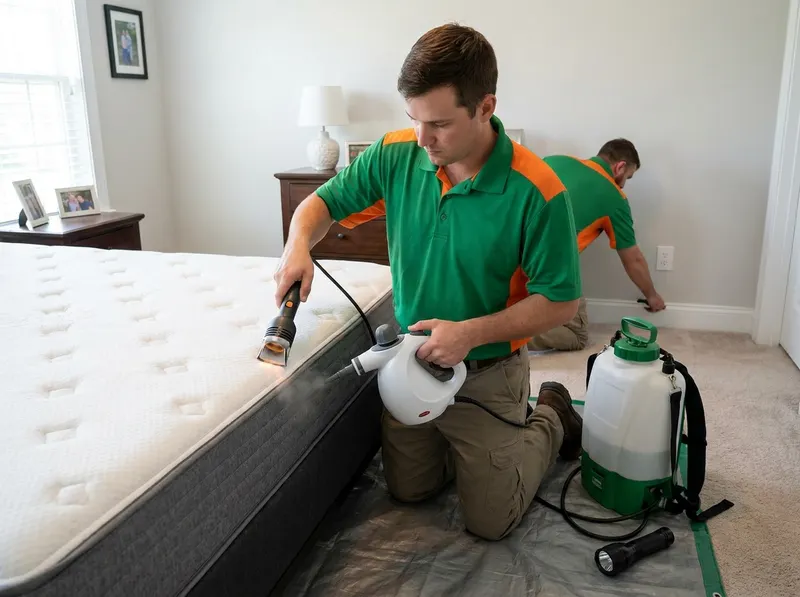
Bed bug control in Greenville addresses biological pressures amplified by the humid subtropical climate of Upstate South Carolina. The species Cimex lectularius thrives in indoor ambient temperatures between 70°F and 80°F, frequently entering homes near the Reedy River and downtown Greenville through luggage, guest transitions, or antique furniture. Infestations manifest along tufts of mattresses, behind headboards, beneath electrical faceplates, and inside baseboard transitions. Rather than deploying broad chemical sprays that drive insects deeper into wall cavities, professional remediation pairs targeted physical extraction with desiccant dusts and precise thermal monitoring verified under CDC guidance. Property owners along Augusta Road, Parkins Mill, and Alta Vista often discover that retail pesticide foggers cause bed bug populations to scatter into adjacent crawlspaces or HVAC returns, compounding remediation complexity.
Selecting treatment options requires weighing structural requirements against occupant schedules. A targeted dual-stage steam and desiccant protocol fits isolated master bedroom infestations in historic North Main or Overbrook residences, where preserving original lath-and-plaster walls is paramount. Whole-home heat remediation, governed by standards from the National Pest Management Association, suits multi-bedroom modern builds in Verdae or Gower Estates where pests have migrated through connected utility penetrations. The trade-off between approaches centers on preparation labor versus treatment speed: steam protocols require extensive item laundering and staging, whereas whole-structure thermal treatments require less personal sorting but demand strict mitigation of heat-sensitive electronics and vinyl fixtures.
Operational protocols follow a sequential five-stage remediation cycle to verify eradication across every developmental phase. Numbered steps written as prose outline this workflow: Step 1 begins with a room-by-room diagnostic inspection using high-lumen optical scopes to map harborage clusters; Step 2 establishes an exclusion perimeter by installing certified encasements conforming to ASTM International standards over mattresses and box springs; Step 3 applies high-velocity HEPA vacuum extraction to capture active adults and nymphs from deep textile seams; Step 4 delivers targeted supercritical dry steam exceeding 180°F alongside natural amorphous silica dust applied into wall voids according to Clemson University Department of Pesticide Regulation protocols; and Step 5 concludes with placement of continuous passive interceptor traps beneath furniture legs to monitor zero-emergence rates across a 21-day incubation window. For homes situated near Paris Mountain State Park or The Cliffs Valley, technicians examine subfloor timber boundaries where moisture differentials can draw secondary pests.
Property owners can prepare their homes by executing clear operational measures prior to technician arrival:
Every job gets a firm, written price after an on-site visit.
Tell us about your bed bug control job in Greenville and we'll send a clear, written quote, usually the same day.
 GoldenMeadow Pest Defense